
INTRODUCTION
In the modern world, the vast majority of people go through life satisfied with the photographic quality of their smartphones. And of course there’s nothing wrong with this. But there is an ever-growing subsection of the population who, for one reason or another, becomes interested in photography using a dedicated camera. The act of seeing an image in your mind and creating a tangible (or digital) version of that image through an effective capture and editing process becomes a labor of love. And while most people that take up this passion do so using digital cameras, I think that within this subsection of the population, most have at least pondered the idea of making images using film.
The benefits of film photography are myriad. People wax poetic about the visually pleasant character of images captured on film. The untrained eye might simply say that the image is more organic or soft. But as the eye becomes more trained in breaking down the individual components of a “filmic” image, we begin to note thing like a subtle and pleasant highlight rolloff, and unique hue, saturation, and luminance characteristics at each color in the spectrum that differ from reality, but in an emotive way. And of course, we note the pleasing grain pattern that results not from an overlay (as some people place over digital images in an attempt to mimic the film look), but from the very nature of film as an emulsion of grains of silver halide exposed to light. But even as we learn these individual components that make film what it is, in summation these components add up to something that even the experienced film photographer has trouble articulating. And this is the “magic” of film. This inarticulable character is what keeps it alive today.
Beyond the character of the image, the process of capturing photos on film requires a more intentional and considered approach given the permanence of mistakes on a roll which might only hold 36 images (or even less if you’re using an Xpan). And in a fast paced world of overstimulation, being forced to slow down and move through moments more deliberately is a valuable opportunity with perhaps broader applications to life in general. And finally, once an image is captured, film has its own unique development process which can be satisfying, requiring a more involved and tangible interaction utilizing a chemical process on a physical medium.
But for the wrong person, each of these potential benefits can be unappealing. Some might not like the colors and grain of film (although I haven’t come across many of these people). Some prefer being able to see what they’re capturing in the moment rather than having to wait in anxious anticipation through a development process. Roger Deakins talks about this very thing with regard to film capture in cinema. For some people the expensive, somewhat complicated, and potentially temperamental development process represents too significant an investment of money and time to be worthwhile, no matter the quality of the resulting image. And of course there’s the price of film. You’re essentially paying $0.50 per shutter click if you’re using some of the more popular “professional” films like Kodak Portra.
And so, while the look of film isn’t usually polarizing, the process of shooting on it certainly can be. While most photographers at least ponder the idea of shooting on film at some point, not everyone gives it a go, and those that do might not be around for long. As I thought through all of these factors, I wasn’t sure exactly where I sat on the spectrum of film affinity. So, in early 2022 I pulled the trigger and ventured into the world of film to learn from experience just how much I might (or might not) like it.
After a long day of work, there was still an hour or so of daylight left when I left the hospital and pulled my car up to the front of a nearby camera store. The entire front of the small vintage building was faced with floor to ceiling windows, providing an enticing view of the interior, lit by fluorescent lights on the ceiling with a few aisles of camera gear near the front, and endless shelves of old cameras behind sliding glass doors on the back wall. A bell hanging from the door rang as I walked in to start my adventure, and an employee behind the back counter greeted me. He spent the next thirty or so minutes getting cameras out of the display cases and letting me toy around with them. Initially a Pentax K1000 grabbed my attention. I got familiar with its settings and pointed it around the store snapping the shutter. I almost decided to buy it, but when I turned back toward the counter another slightly smaller camera caught my eye: an Olympus OM1. There’s certainly something to be said for enjoying interacting with a tool, whether it’s a set of Mitutoyo calipers, a Japanese pull saw, or a camera. And there was something about the density and hand-feel of the Olympus that drew me in. A few minutes later I was out the door with this camera, a 24mm lens, and a roll of Kodak Ektar.
A few weeks went by before I had the opportunity to try my new camera out. On a rare free weekend I loaded the film into the camera and my wife and I set out for a day of hiking in the mountains north of Tucson. With the OM1 loaded with a fresh roll of film in hand, my mind immediately set to looking for good compositions. And compared with a digital camera, the fully mechanical device and knowledge that I was limited to 36 shots combined to force a significant mental shift. The mind is forced to slow and consider each composition. Is this vantage really worth it? You walk around an area to take it in before deciding how to photograph it. And once you decide on a composition you have to nail the exposure and focus. You end up in a sort of smooth and deliberate mentality I’d liken to the pacing of a Dennis Villeneuve film. Here’s my composition. Deep Breath. Focus. Aperture. Shutter Speed. Exposure meter within range. Check focus once more. Click. I loved it. And I’ve found that because of the smooth and deliberate nature of film photography I remember the entire moment surrounding each photo I’ve taken, even through to when I finally found some time to write this piece almost a year later.
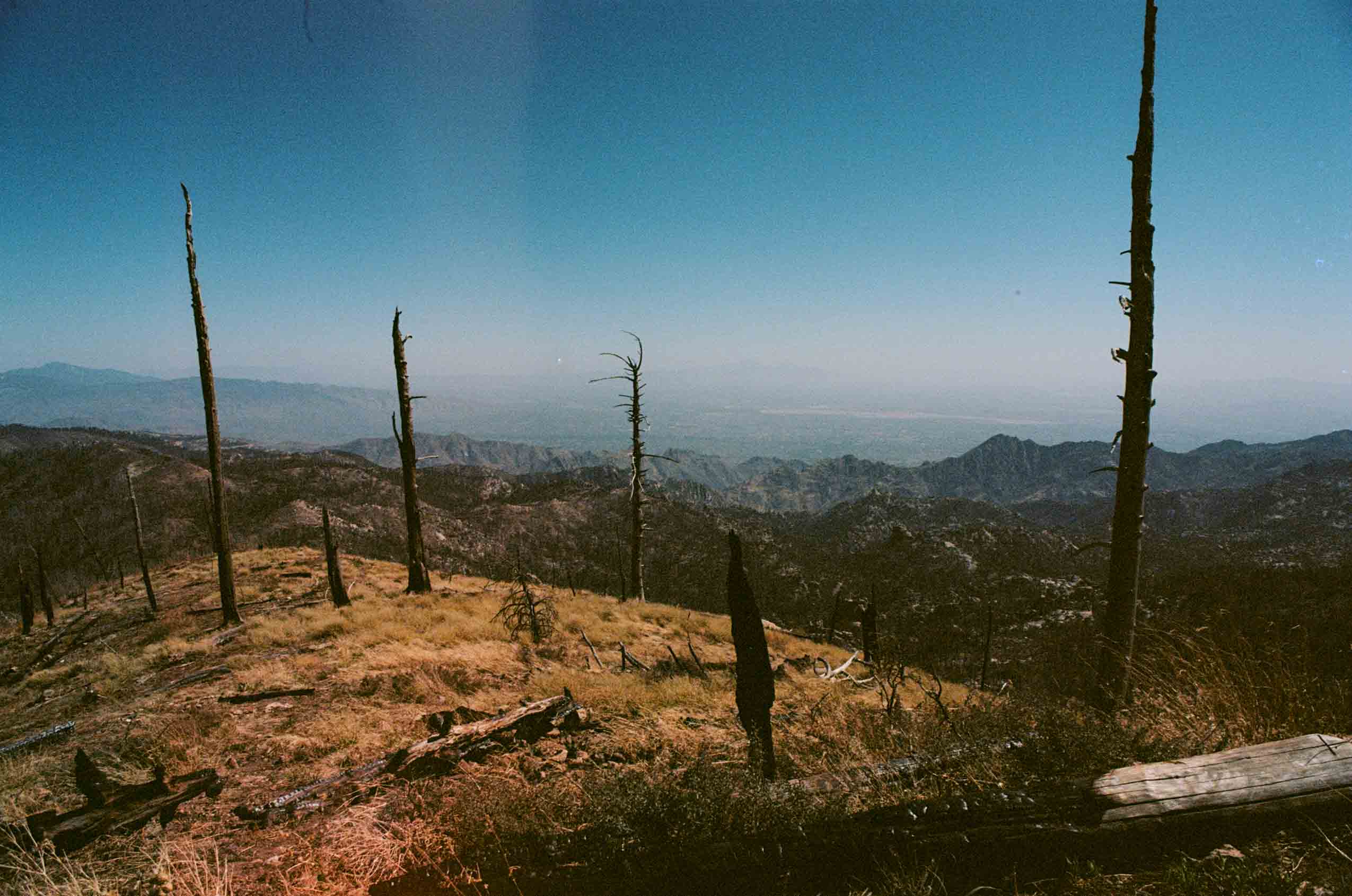
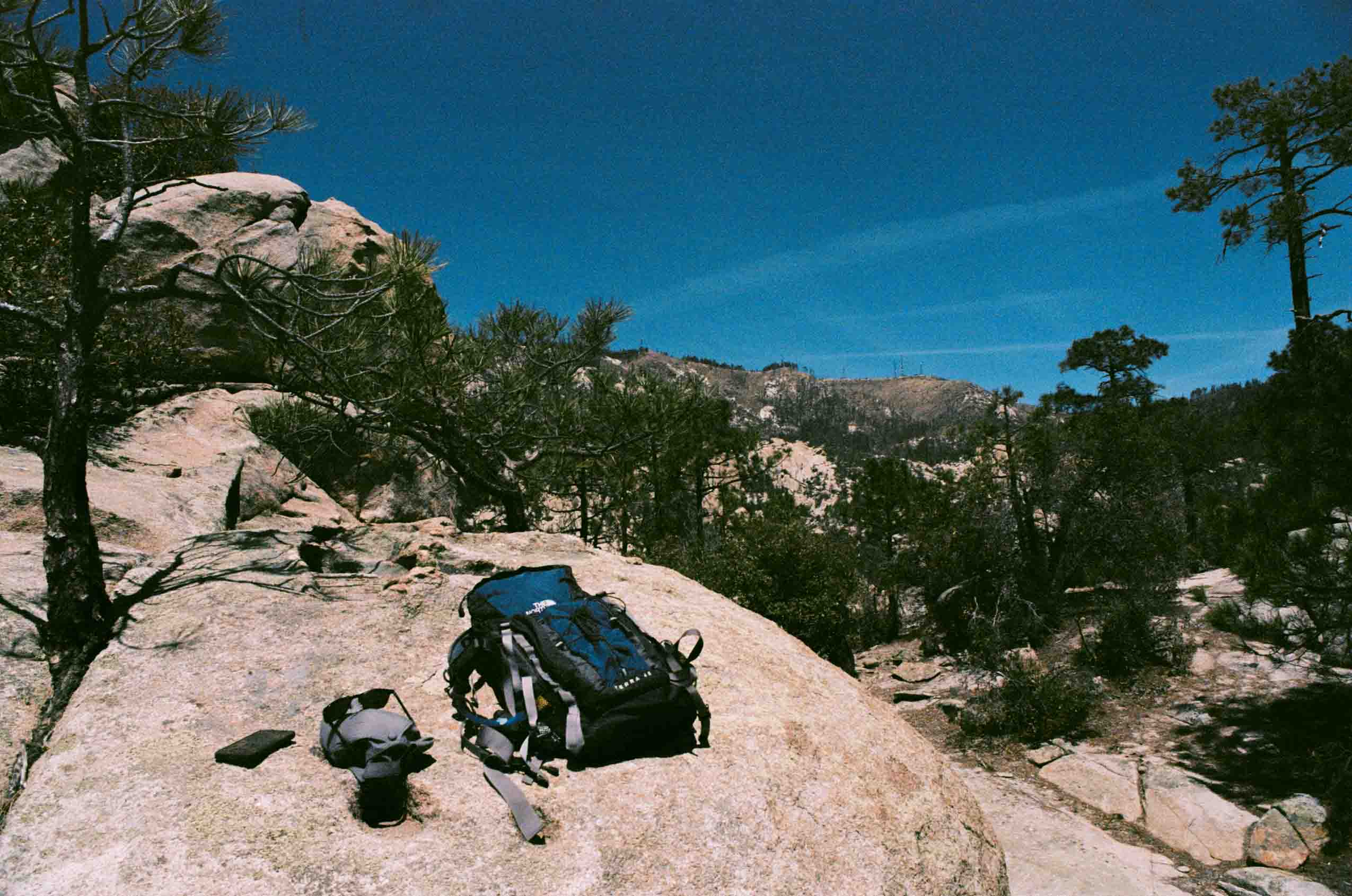
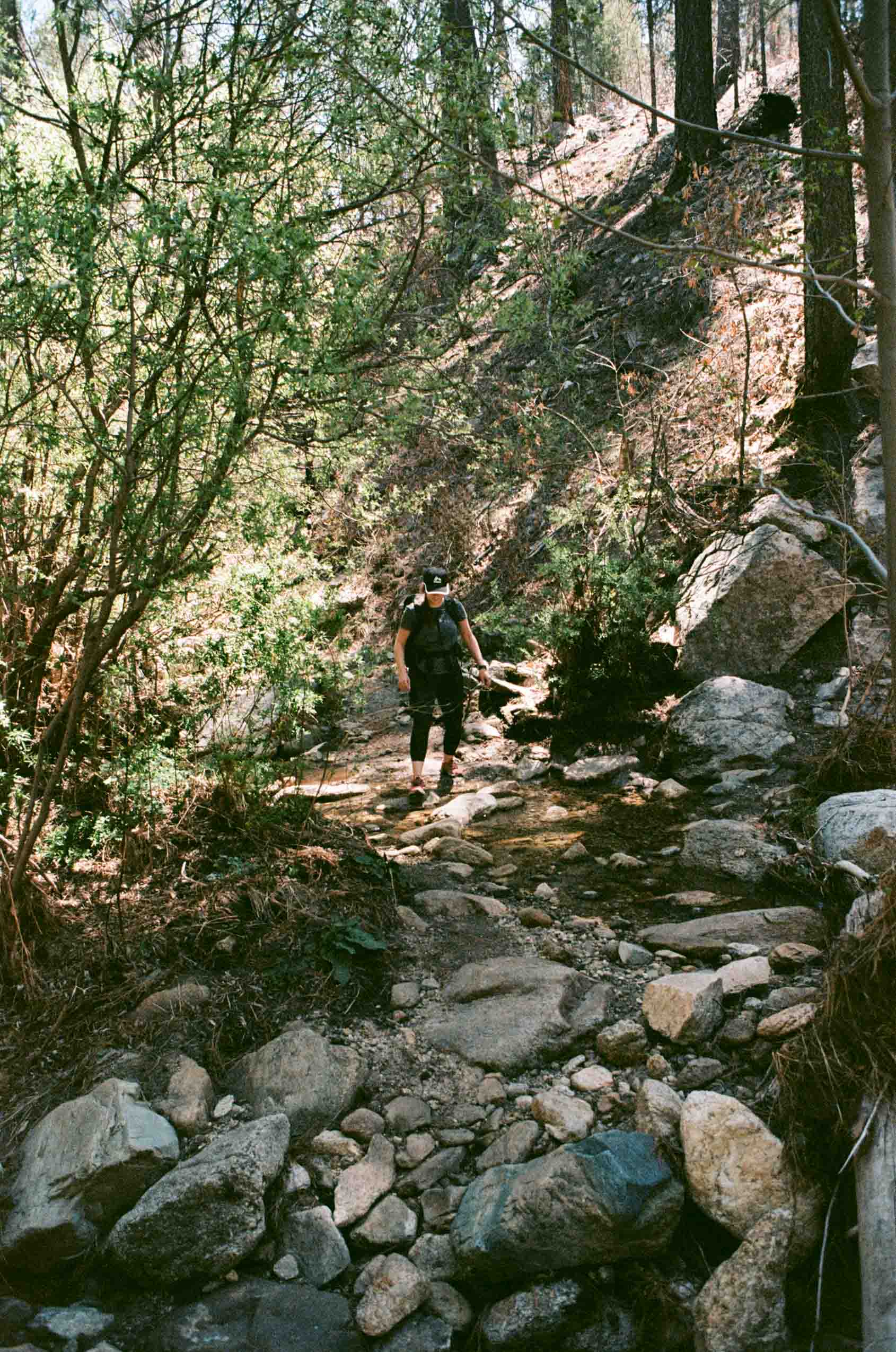
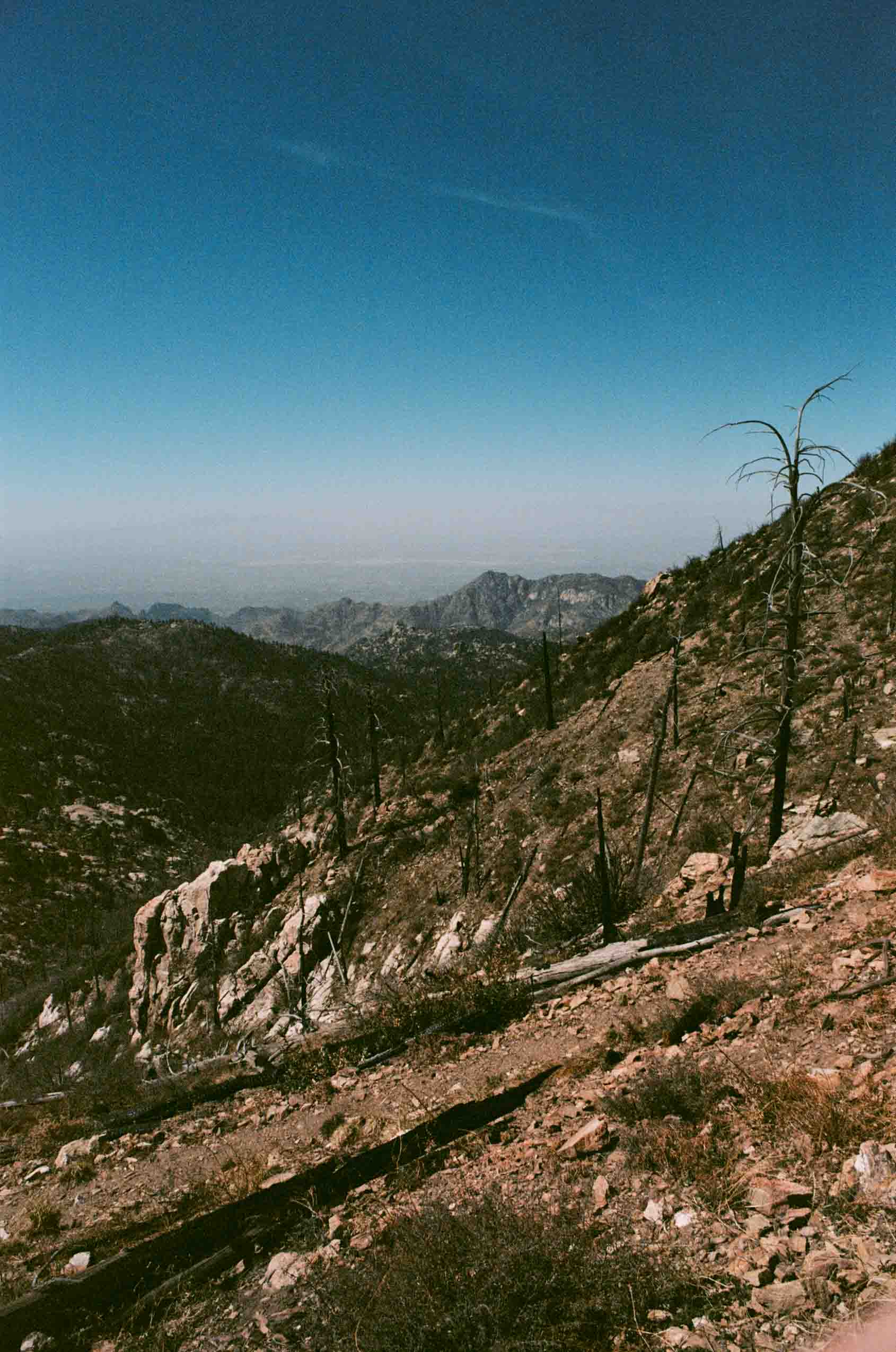
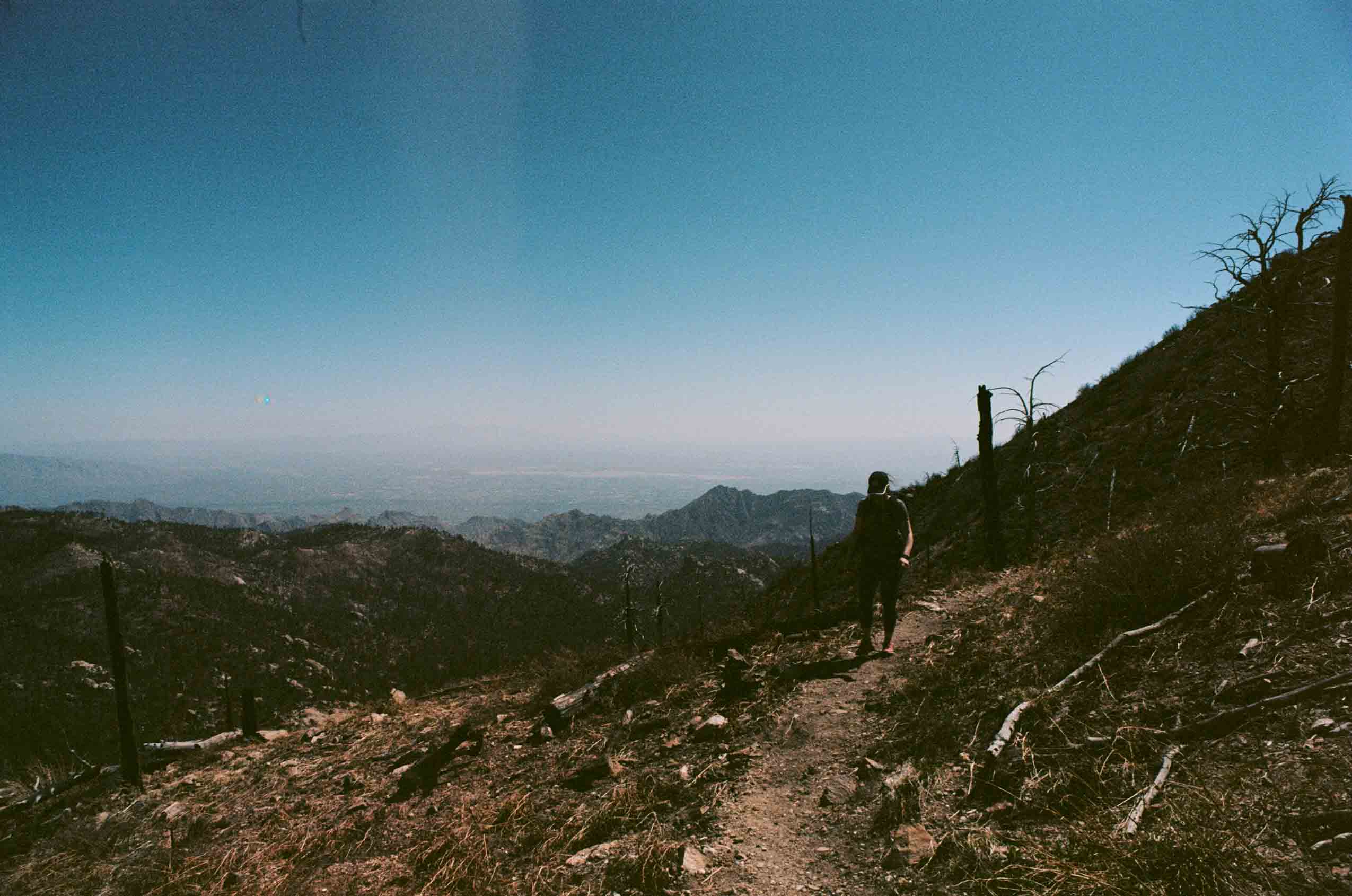
Ektar 100 on top of Mount Lemmon
A few weeks later, a friend and his family came over for dinner, and I used it as an opportunity to capture a few more frames on my roll of Ektar 100. It was this experience that helped me begin to see the drawback of the more deliberate and slow photographic process. A running child is hard to capture without significant anticipation. And if you try to dial in your settings for the right moment in one part of the backyard, kids don’t play by the rules, and will likely be in another part of the yard or under a shaded porch by the time they do something photograph-worthy. This ultimately means that you end up missing some moments you might have otherwise captured on a digital camera. However, this is only a drawback in certain situations, and for the subjects I typically photograph, this certainly is not a dealbreaker.
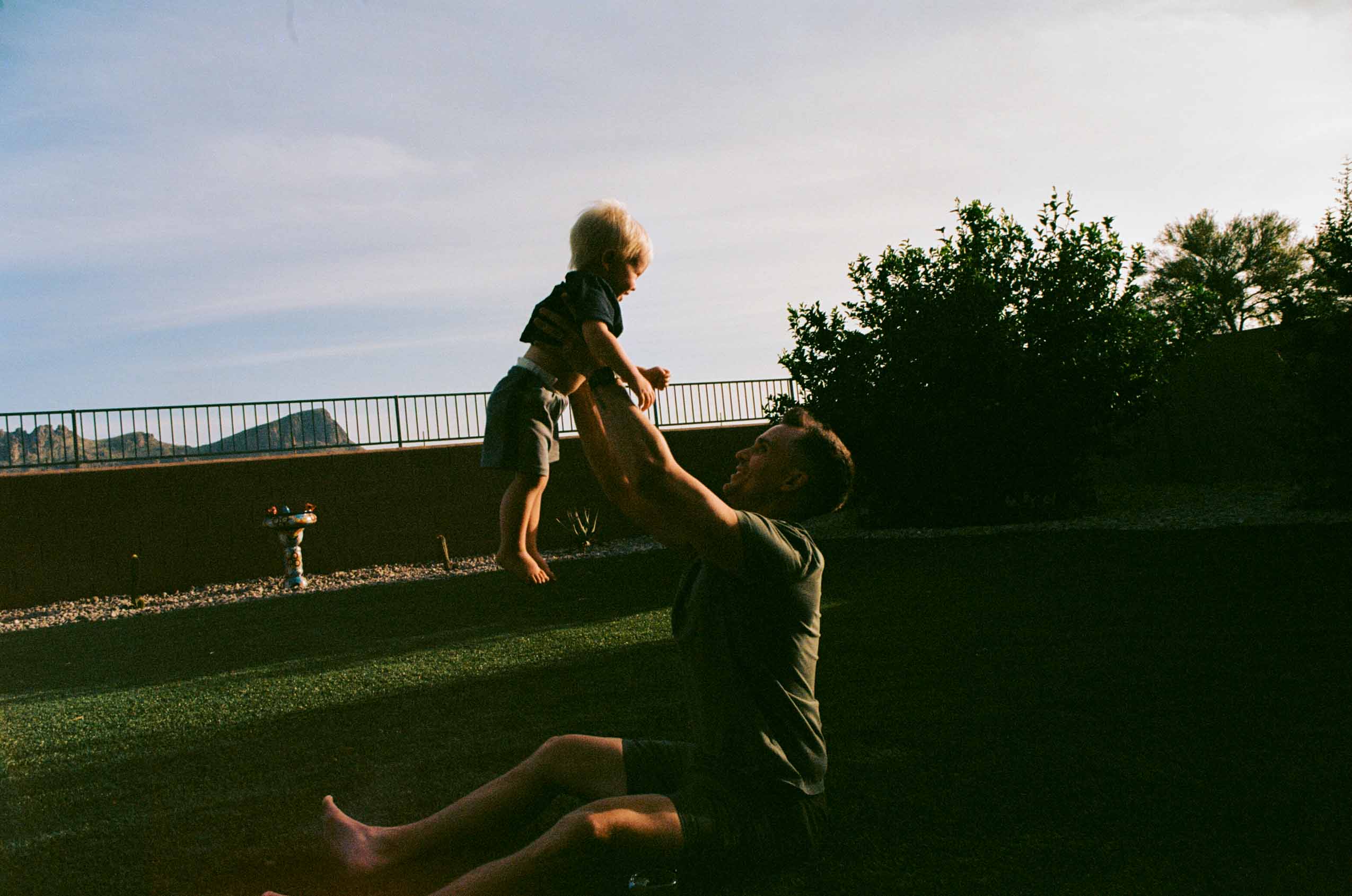
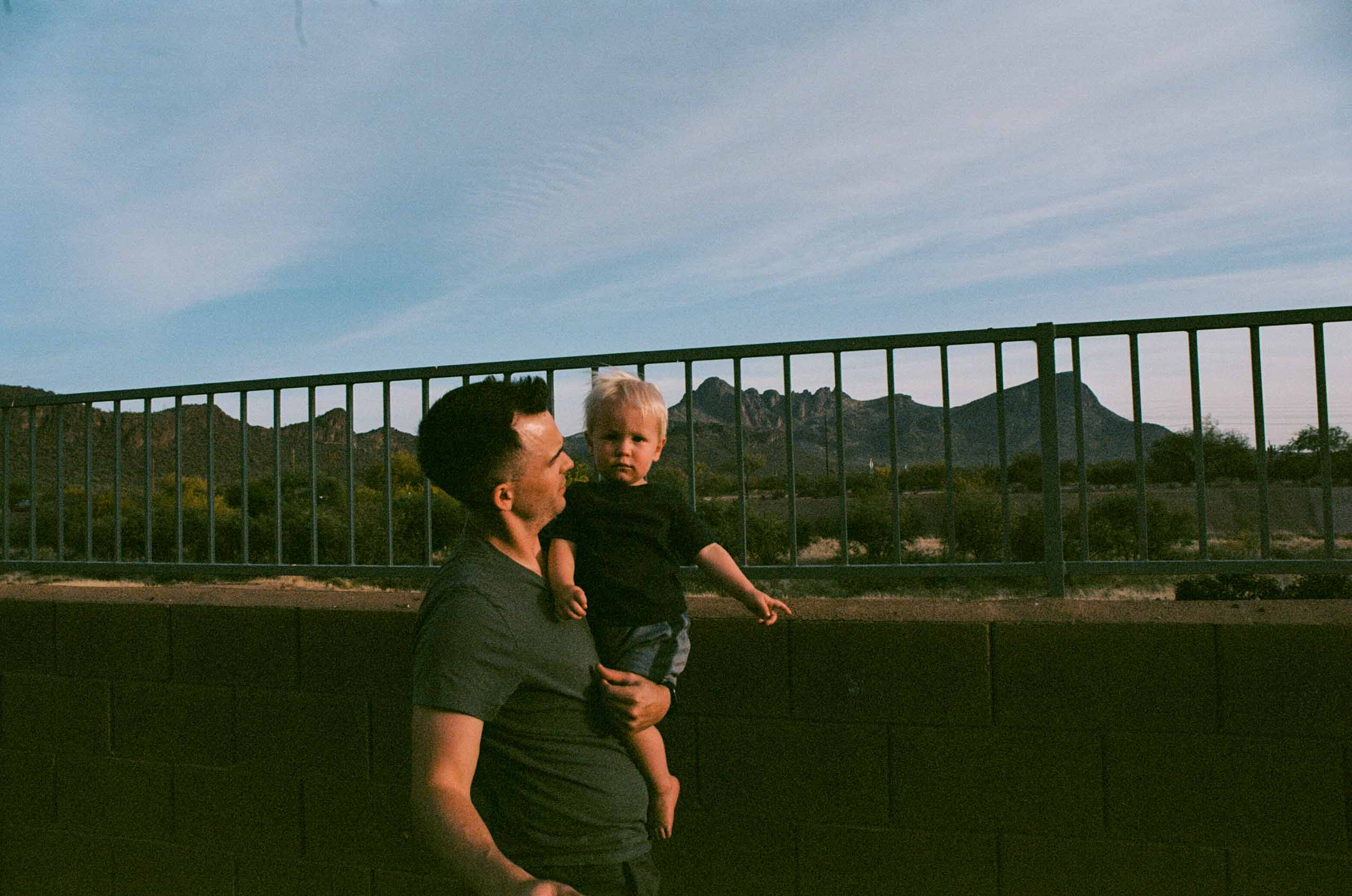
Ektar 100 in a Tucson backyard
My roll of Ektar finally came to an end Biosphere 2, one of my favorite places to visit in Tucson. This one of a kind facility is only about thirty minutes from my house and has a fascinating history that sits right at the intersection of many of my interests. I won’t get into all that here, other than to say that you should learn more about it for yourself.
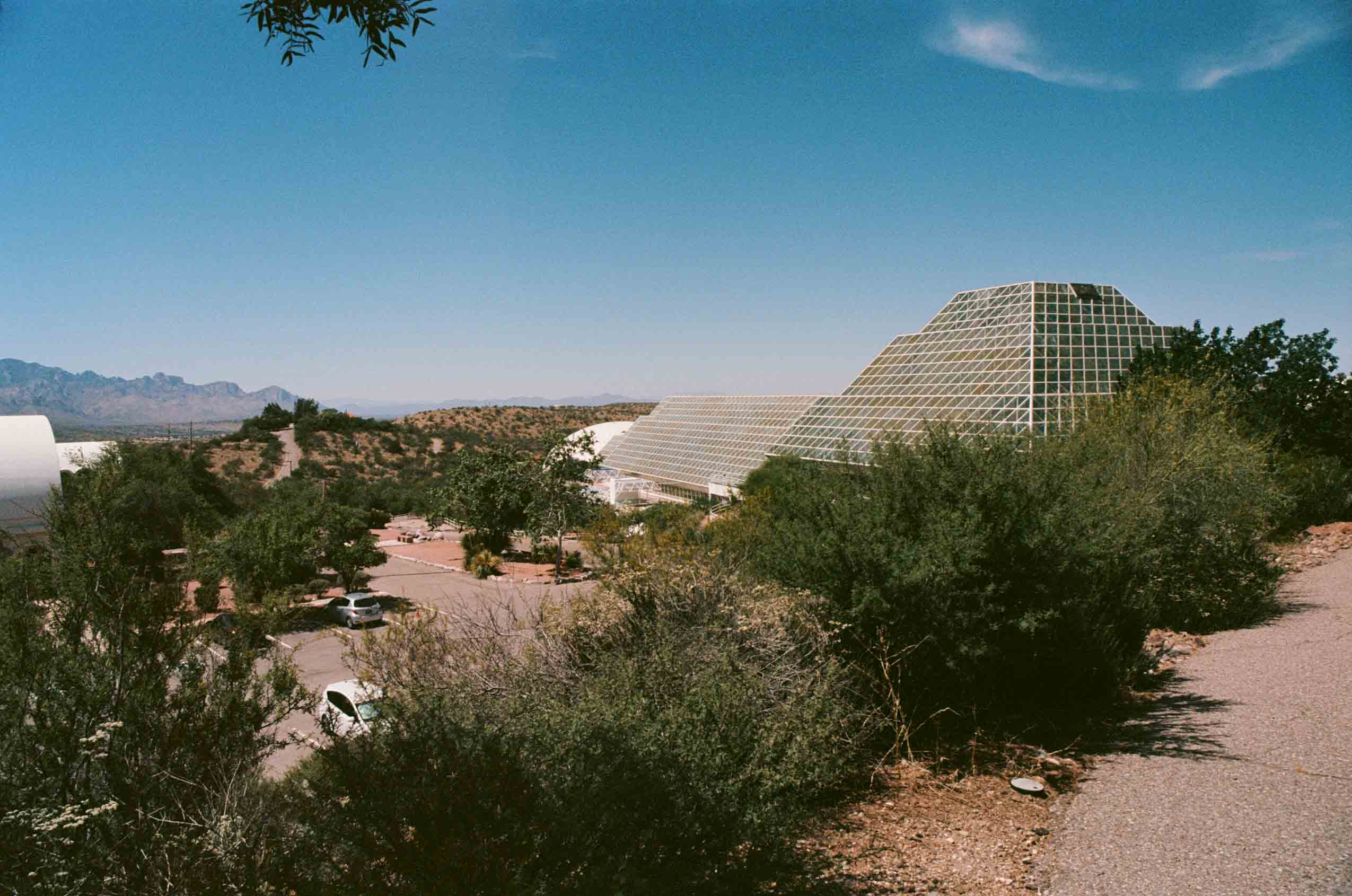
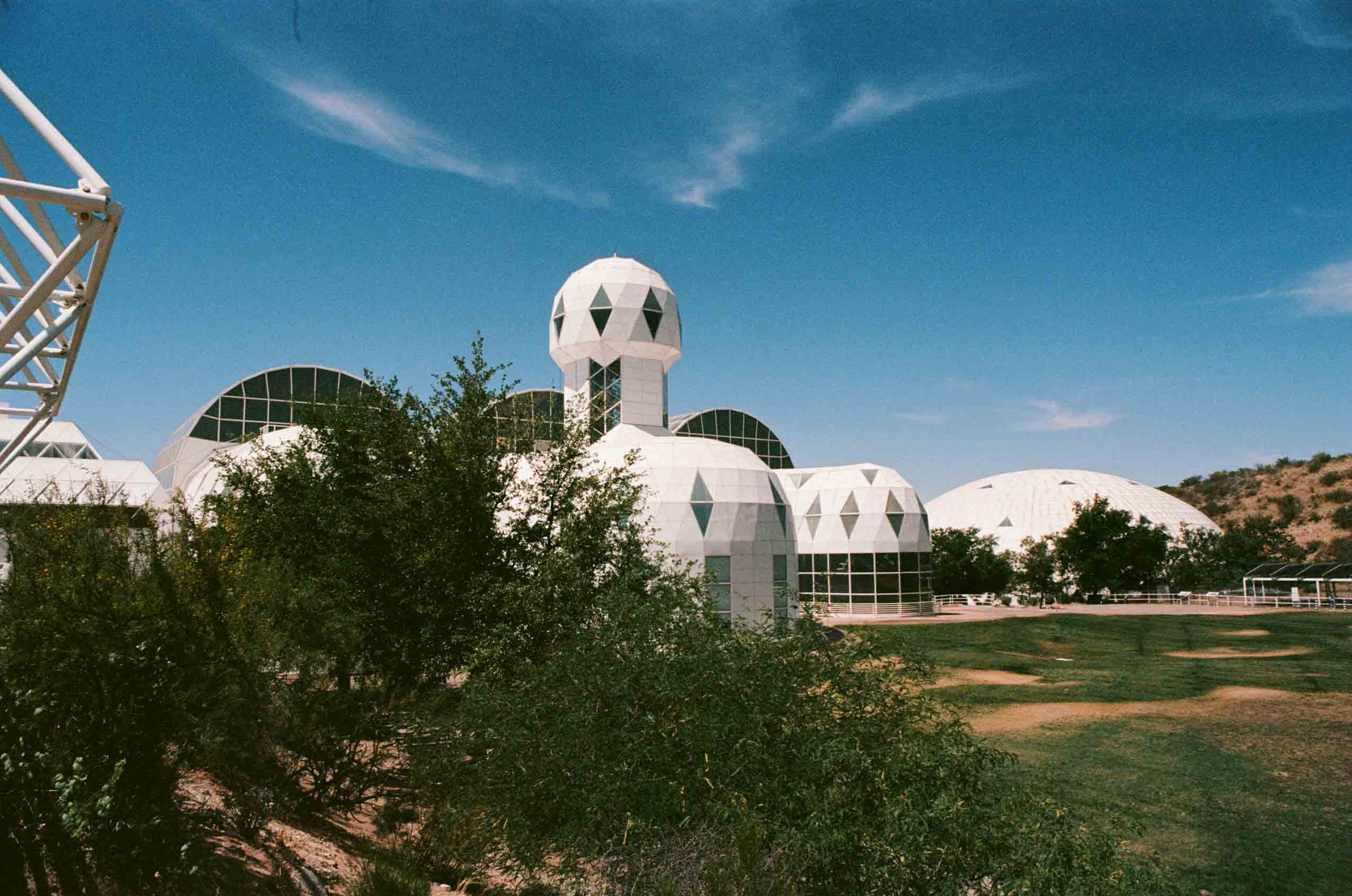
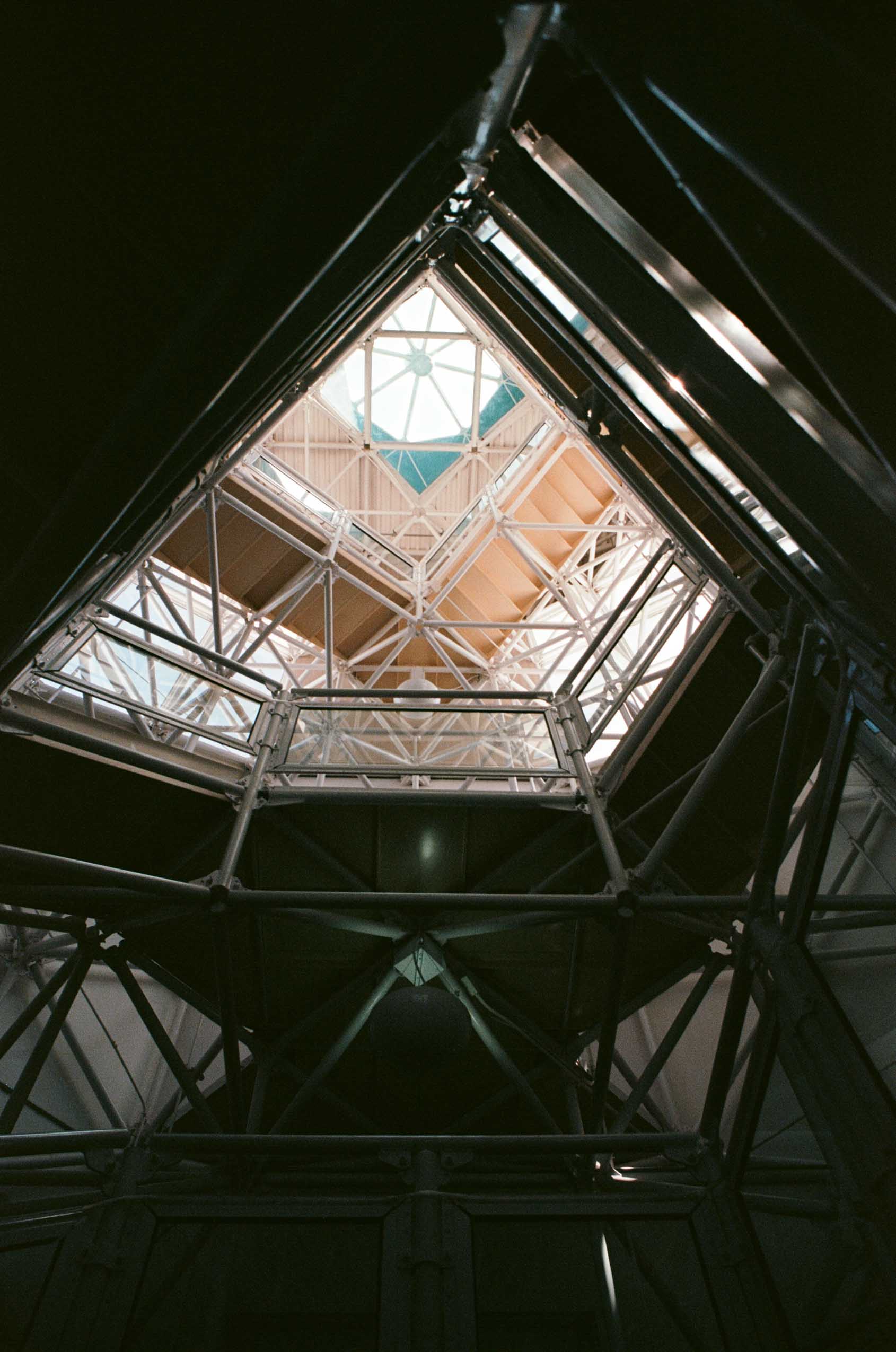
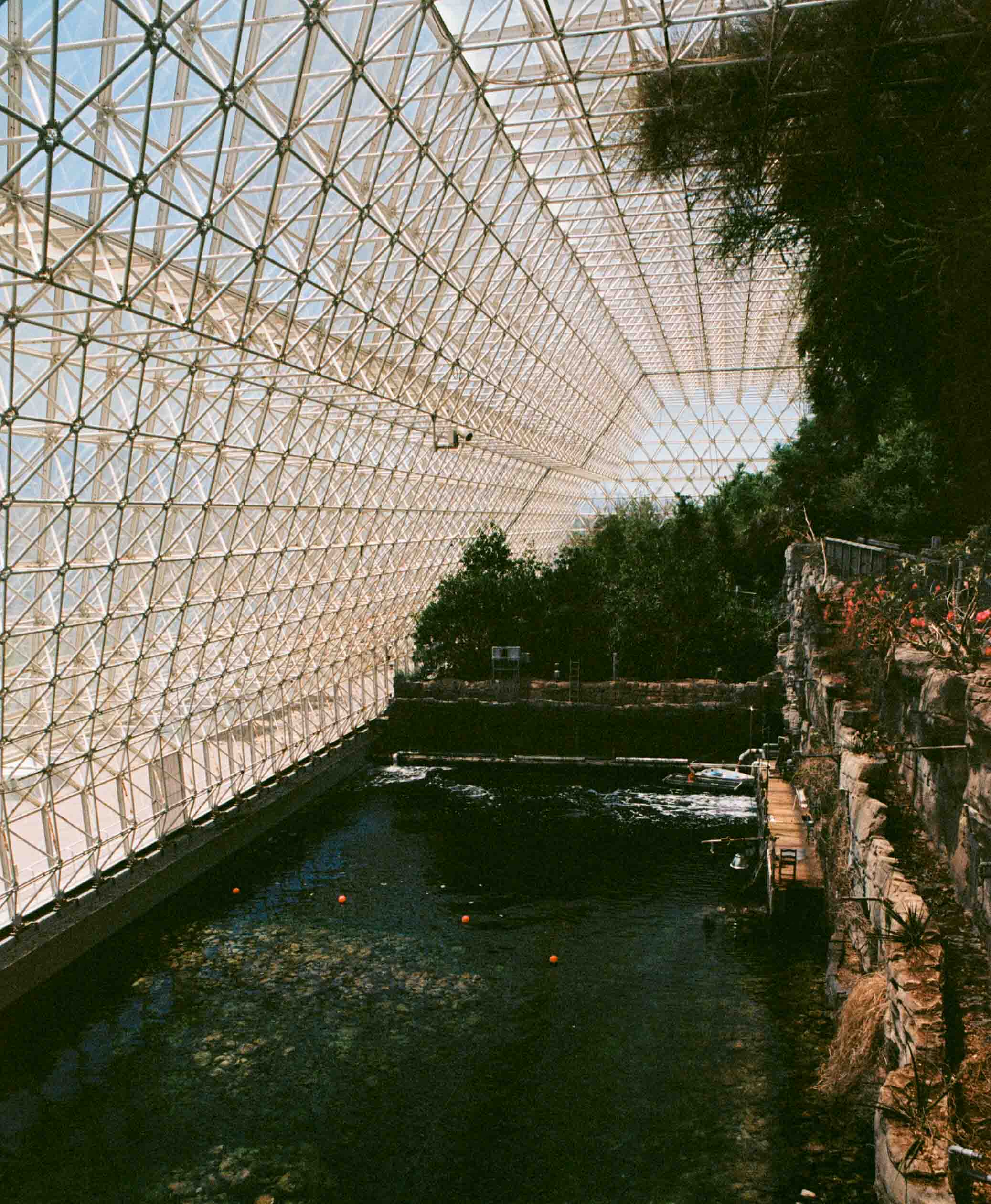
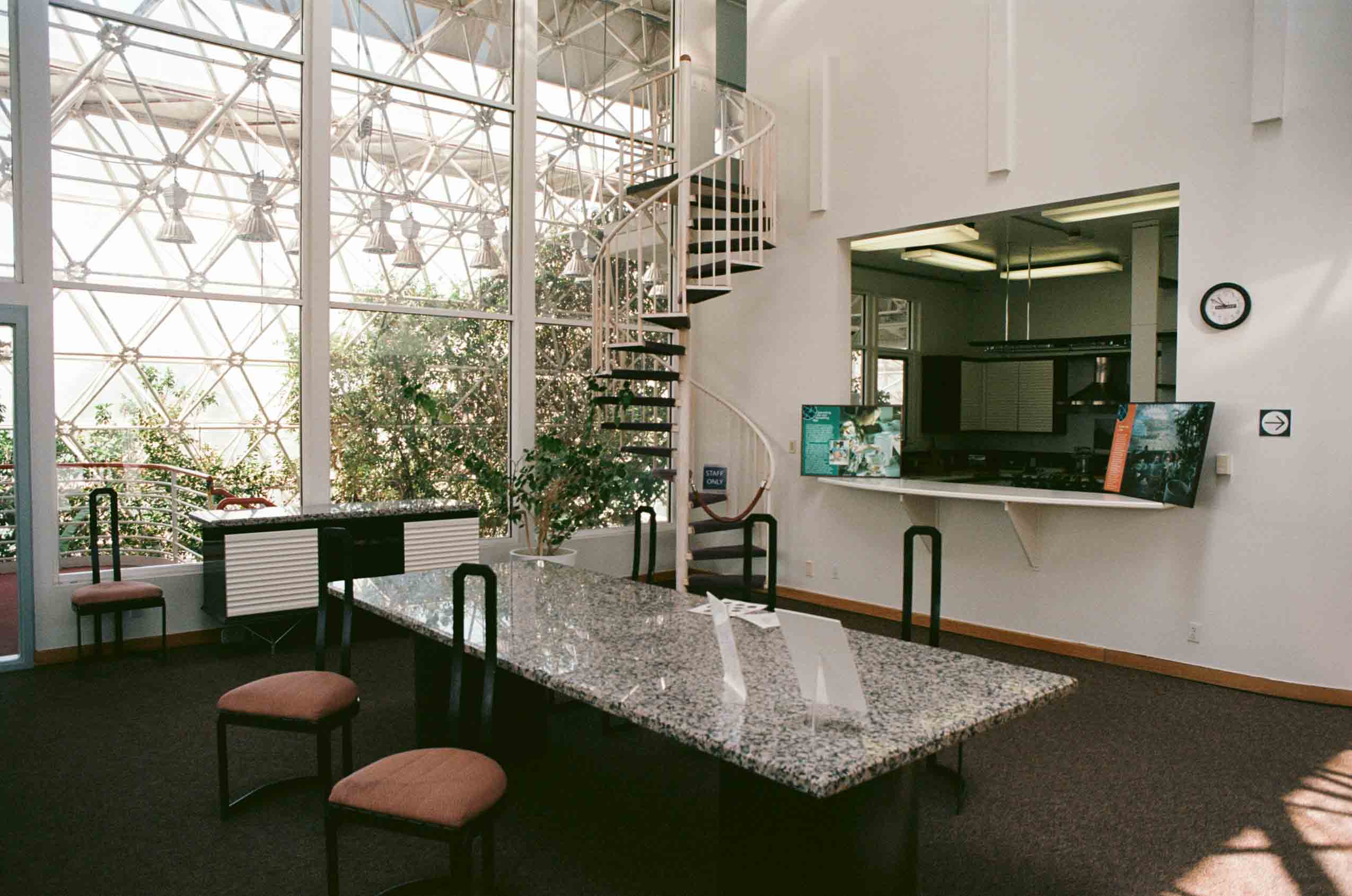
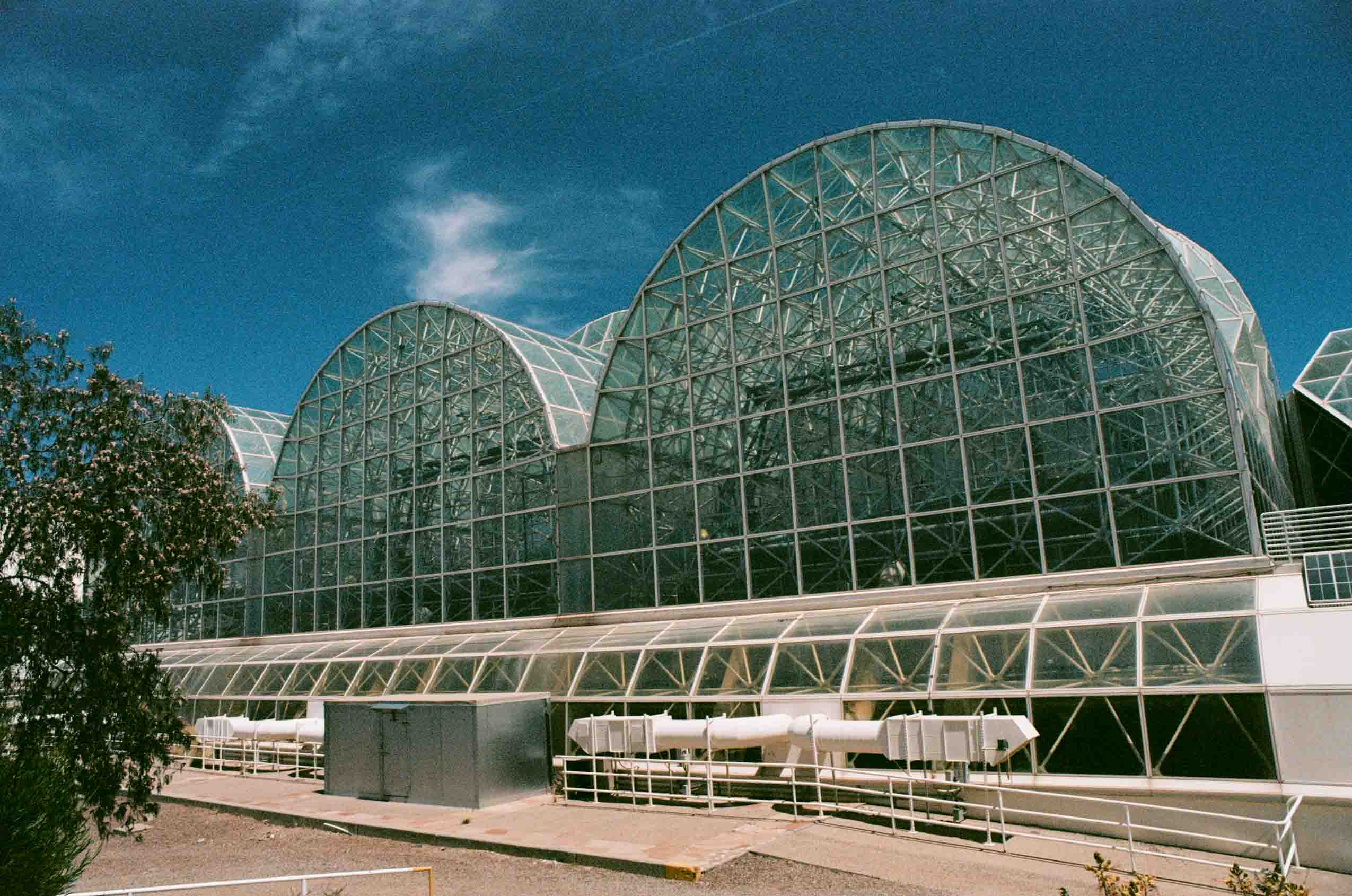
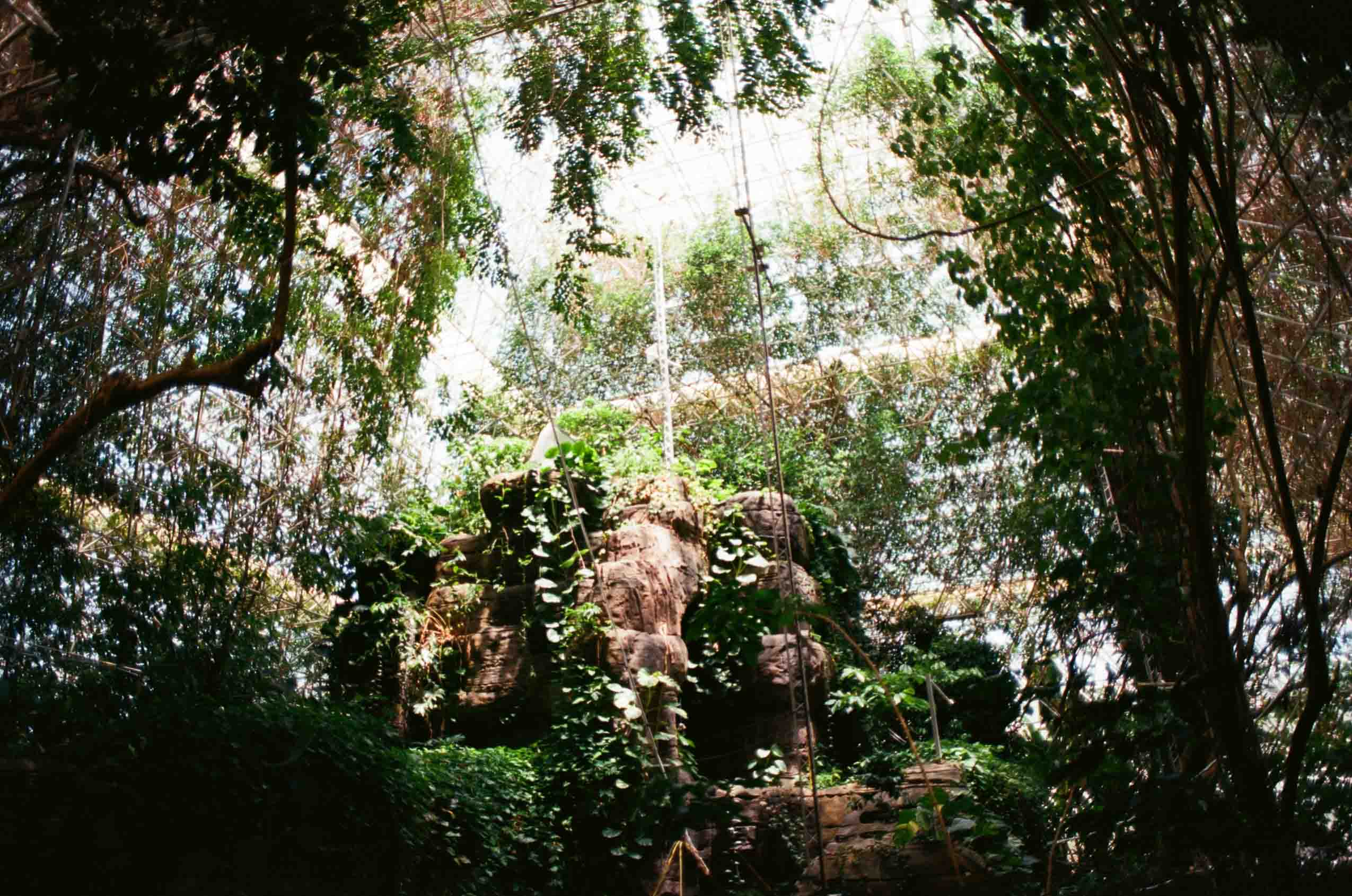
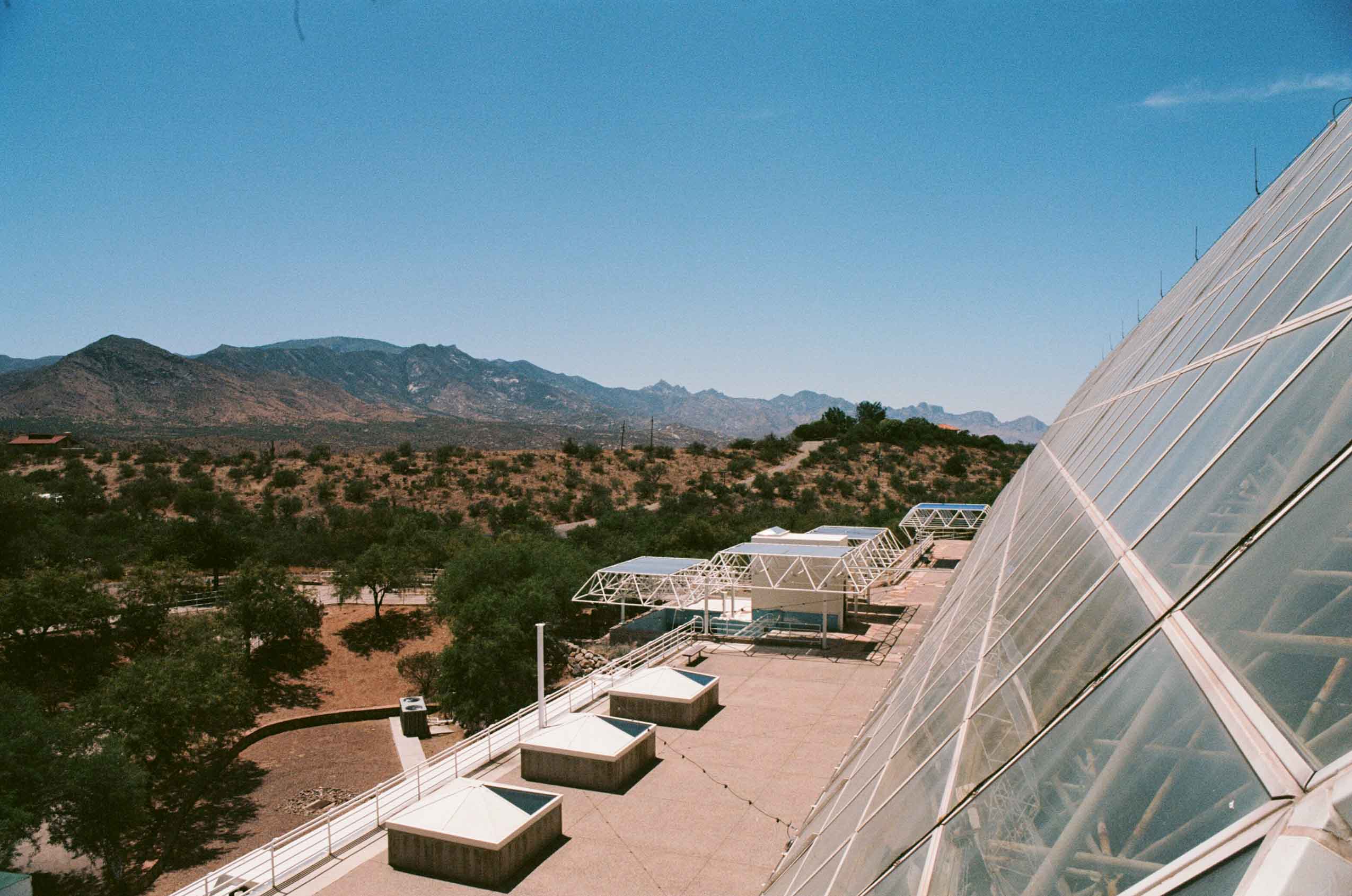
Ektar 100 at Biosphere 2
And with my first roll of film finished, it was time for the next step: Development. And for me, this is where the appeal of shooting on film began to wane. I’m someone who likes to do things myself as much as possible. I build my own computers, fix my own car, do my own home renovations, and occasionally, build my own furniture. And as a part of a hobby that I idealized for its intentional, more involved process, I wasn’t about to send my film out for someone else to develop. I had done my research on the development chemicals (referred to simply as “chemistry” in the film world, which I found slightly frustrating for some reason) I needed and how to go about doing it, confident that I could get it done. Then I looked at the cost of the supplies and learned that the development chemistry expires after a few months on the shelf if stored properly, which presented an issue. As a resident physician, my opportunities to engage in photography are few and far between, usually occurring during vacations and occasional free weekends not taken up by long periods of long days at work, research projects, or catching up on everything else I need to do which was neglected during those long periods of long days at work.
I can’t go out every weekend and shoot a new roll of film. For those that can, investing in film development supplies and using a single batch of film chemistry to develop several rolls of film before it expires makes sense on a dollars/photo basis. But for someone who might shoot a single roll of film over three weekends and then not have the opportunity to photograph anything interesting for the next five months, the cost and effort of mixing up the chemistry simply doesn’t make sense. I might only develop one roll before having to buy and mix a new batch. And as I toiled over this decision, work and home life picked up and several months went by with my exposed but not developed film canister sitting on a shelf (which I know isn’t great for the final photos). Eventually, I decided that my current lifestyle simply didn’t allow the sort of time necessary to deliberately develop a roll of film, and I ultimately sent it off to be developed at the wonderful Indie Film Lab. About a week later, my scans were in my inbox, and the results are those you’ve seen throughout this piece.
Of the photos that turned out without significant imperfections, the end results were thrilling. That same filmic “magic” I mentioned above was on full display, taking what were everyday moments and immortalizing them in emotive grains of a light-sensitive metallic salt. Of course, there were pictures that didn’t turn out so well. In some of the acceptable photos above you see a light leak spanning the frame. In some of those I don’t show here, the light leak artifacts were so bad that the end result was unusable. A few others were marred by user error, either with improper exposure, or displayed a portion of my finger from adjusting the focus ring while I snapped the photo.
The issues brought on by user error are, in my opinion, a benefit of shooting film. It’s this unforgiving nature of film photography that encourages us into a more intentional and deliberate mindset during image capture. However, the artifacts that potentially ruin an otherwise great photo, and seem to present themselves unpredictably (although admittedly, with more experience I may learn the conditions that cause them on my specific camera) are a bit frustrating. They make it hard to trust my images and ultimately prevent me from using a film camera as my sole camera in instances where I want to capture lasting memories.
So where does that leave me on the spectrum of film affinity? The affinity is certainly still there. For the right situation, capturing on film enables a sort of meditative and memorable experience, with highly emotive resulting images. However, I’m not going to be someone who transitions wholly to film. The unpredictable artifacts, the extra hassle that comes with only having 36 shots before changing rolls, dealing with physical media when in the great outdoors, and ultimately being unable to accommodate the development workflow makes it to where film will have to occupy a limited domain in my photographic passion.
In the end, although I won’t be a complete film adopter, the more intentional image capture process of shooting film –the more deliberate and smooth movement from one moment to another– is something that I’ve carried over to my digital photography and am attempting to carry into my life in general. And the “emotional depth” of the end results of the photos captured on film has helped me ponder those aspects which make it so visually appealing, bringing those to my digital workflow and helping me advance my photographic style. Overall, for the price of an old Olympus OM1, 24mm lens, a roll of Kodak Ektar, and development costs at Indie Film Lab, I’d say the takeaways from my first roll of film were well worth it.