INTRODUCTION
As always, you can view the photographic narrative for this story below. What is a photographic narrative?
On one of our last nights in Hilo, we’d booked a trip with Mauna Kea Summit Adventures to watch the sunset and do some stargazing at the top of this 13,803ft volcano. Out of everything we had planned on this trip this was what I was most excited about, and it didn’t disappoint. I’ve always found space fascinating, and over the past few years had made a conscious effort to get more familiar with it. I had visited Kitt Peak National Observatory in Tucson, Lowell Observatory in Flagstaff, and had attempted some astrophotography on a roadtrip through the Mojave Desert and on some backpacking trips in Colorado and through the Grand Canyon. And each one of these experiences had left me with a sense of profound awe. There’s something about the mindset shift that comes with contemplating the scale and distance of celestial objects that I find very calming. Perhaps it serves as a reminder of how small we –and our problems– truly are. In any case, this adventure to the top of a volcano would place me beside some of the best observatories in the world and give me an opportunity to see the solar system and beyond as I never had before.
After driving about halfway up Mauna Kea and meeting our guides at the visitor information station, we boarded a 4wd Mercedes Sprinter van and started toward the top of the volcano. The drive up revealed increasingly spectacular views of the Big Island below. Eventually we rose above the clouds and reached our first stop at a radio telescope, just one component of the Very Long Baseline Array or VLBA. This awe-inspiring piece of astronomical equipment had already started its operation for the night, majestically shifting its position in a giant arc in front of us.
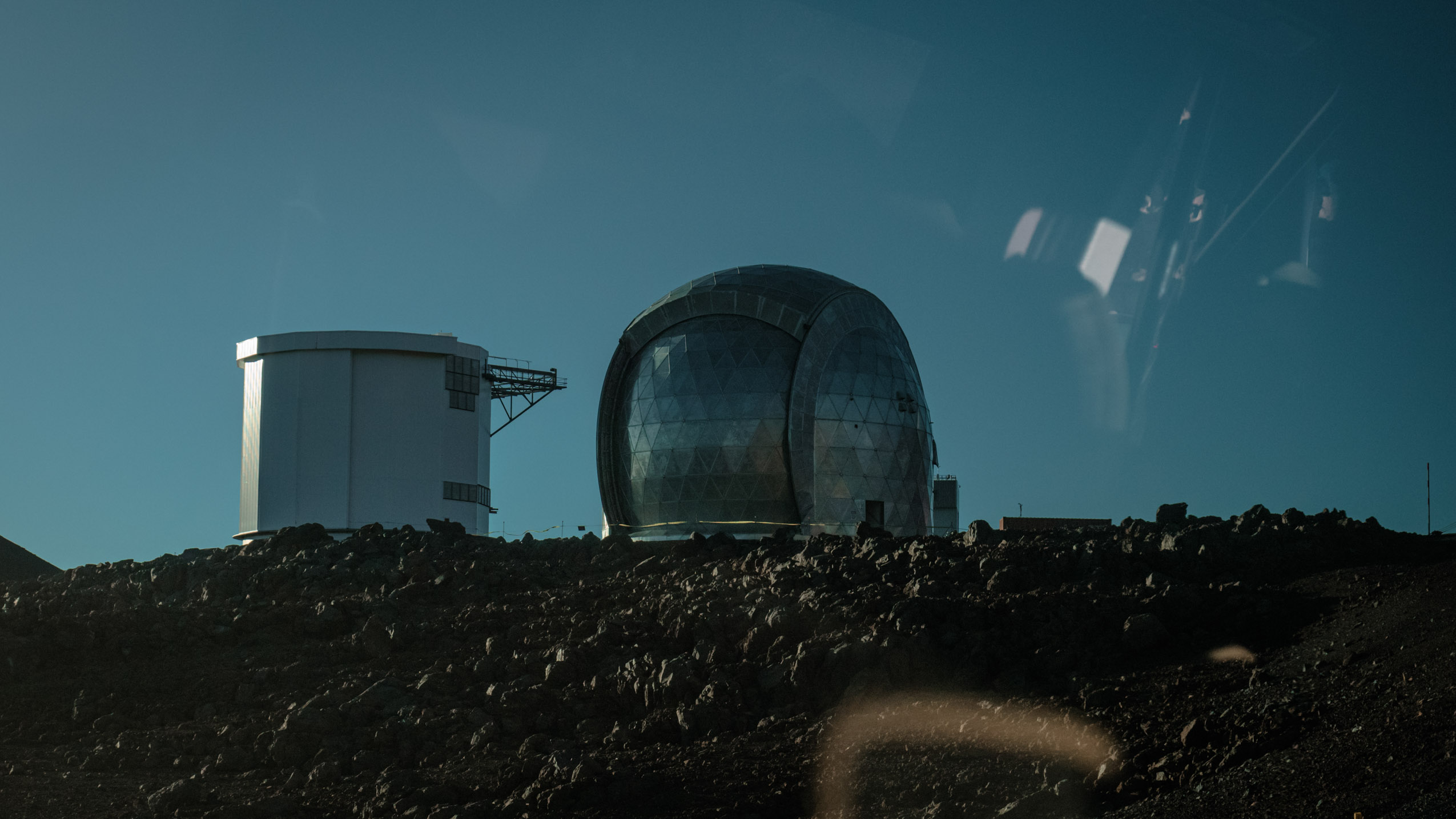
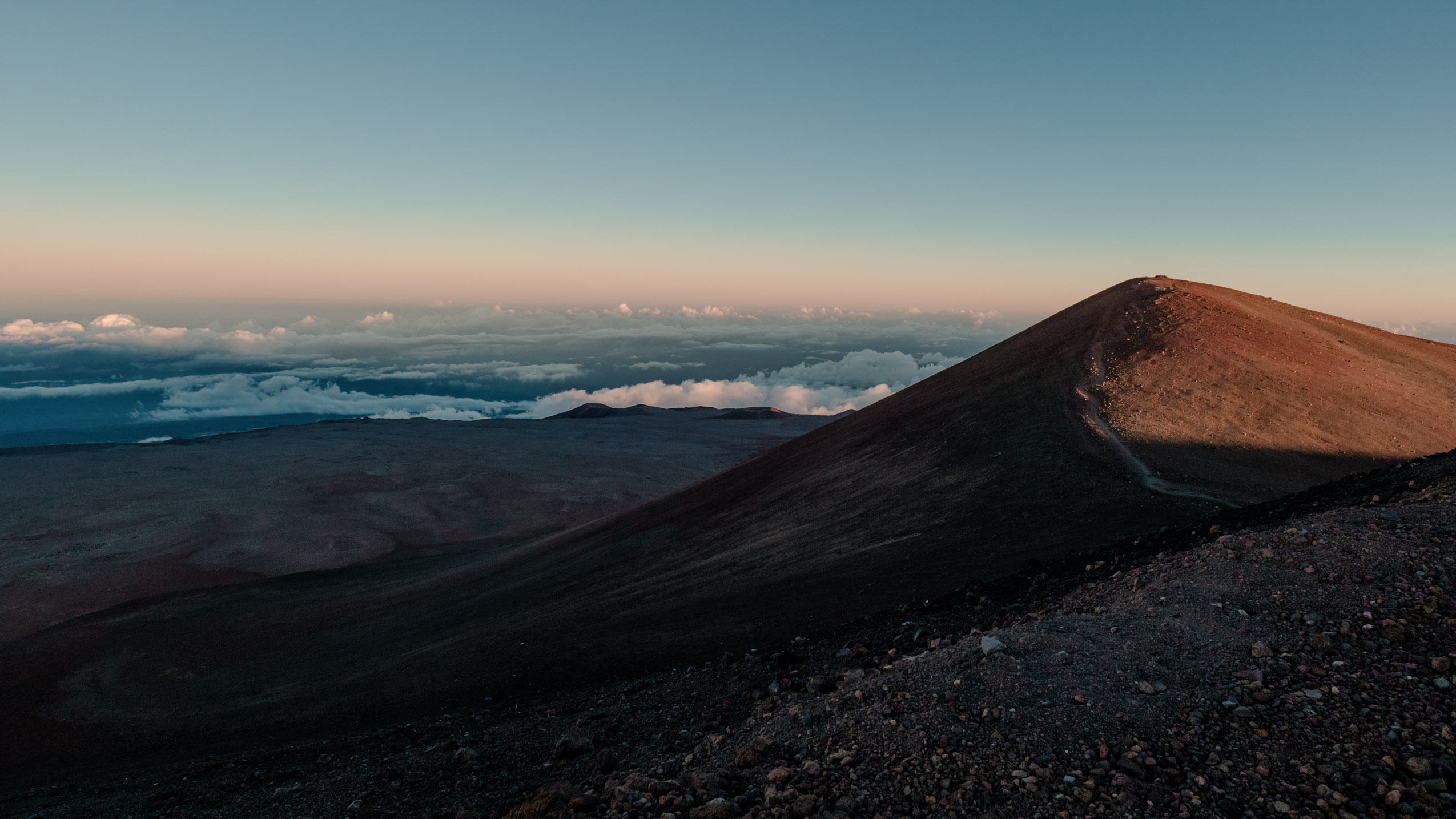
After a few minutes, we climbed back in the van and rode further toward the summit, passing a few other world class telescopes along our route. After a few minutes, we had reached the summit, surrounded by staggering views down at the clouds and ocean below, with the monumental upper hemispheres of observatories imposing themselves all around. We’d spent the majority of our trip to Hawaii thus far at sea level. So, as we started walking around to explore, the effects of hypoxia reared their head. I found myself lightheaded and nauseous. So, I increased my respiratory rate, moved slowly, and after a few minutes, was back to normal. Being forced to move slowly in some ways heightened my enjoyment of the experience. It gave my mind a chance to relax into the moment and deliberately take in all of the beauty around us.
We strolled to the eastern side of the flattened area of land at the summit and stopped next to the futuristic looking gemini north telescope. Gazing down the mountain face, the volcano cast a triangular shadow on the clouds below, revealing its true scale. We stood there for a while, just, looking.
Before too long, we walked back toward the western side of the summit to catch the sunset, passing the University of Hawaii 2.2-meter telescope on our way, colloquially known as the UH88 or just, 88 (there are 88 inches in 2.2 meters). And then, it was time to enjoy the most beautiful sunset I’d ever seen.
With the sun tucked below the horizon, our group started migrating back toward the van. I of course stayed out as long as I could, taking in the magic of dusk atop of Mauna Kea. Eventually, I climbed aboard as well, and we headed down the road, descending about 1000 feet for the second grand experience of the evening: Stargazing. Through an 11 inch Schmidt Cassegrain telescope, we explored the cosmos. It was my first time optically seeing saturn. Of course we’ve all seen photos, but something about seeing actual photons reflected from the ringed giant created a giant pit in my stomach, and led to an instant and profound perspective shift in my mind. I appreciated just how insignificant we are in a way I never had before. The impact of the experience was so great that it later led me to purchase my own telescope like the one we were using here so I could explore the cosmos from my own backyard under the dark skies of Southern Arizona.
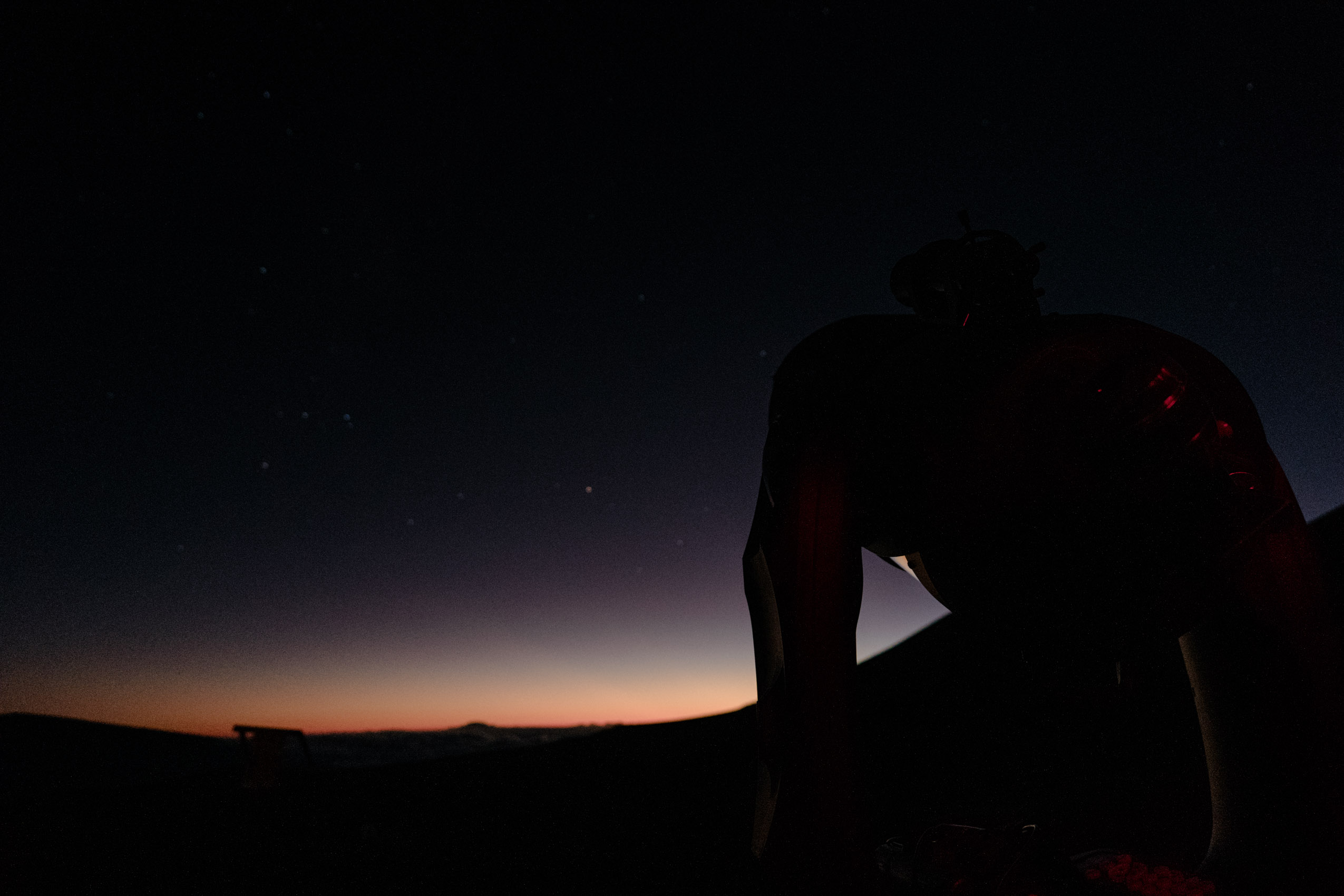
Before this experience came to an end, I took advantage of the complete lack of light pollution to capture some long exposures of the milky way equator. And then, we headed down for the night, leaving with memories we’d never forget.
A STORY IN PHOTOGRAPHS